All about Natural Sharpening Stones
.
There is no right option for any situation: the stones must fit one's requirement and work style. On the other hand, such a large choice can make it tough to pick a practical mix, and so we provide this small guide to help you to make a minimum of a good start.
This step-by-step guide will walk you through how to sharpen your knives using honing stones. We suggest you read our article Picking a Sharpening Stone to assist you identify the very best stone for your application. One more thing to think about prior to you continue is if you would like to hone your knife freehand or utilize a guide such as the how-to for using the knife sharpening guide .
Not every knife requires to begin at the coarsest stone you have, on the other hand a very dull knife can not be sharpened on only your finest stone. Starting with the appropriate coarseness will guarantee that you accomplish the edge you require quickly. If your knife is very dull or has actually a nicked blade, start with your coarsest stone.
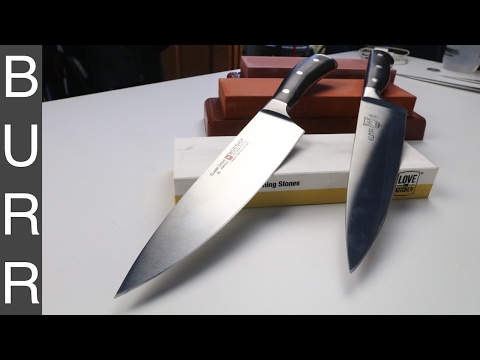
The Facts About Knife Sharpening Stone Uncovered
However, the coarse stone should be followed up with your finer stone to fine-tune the edge. If your knife is only a little dull and just requires a fast retouch, starting at a medium or fine stone can conserve you time. Beginning on a fine stone needs less actions but need to only be utilized on an edge requiring little work.
For more detailed guidelines on selecting the ideal angle, Some stones require water, while other stones require oil for floating the swarf (small metal filings created when honing) away. Just use a couple of drops of either oil or water directly to the stone. (We advise using a low-cost spray bottle for using the water.) The lube you need is figured out by the type of stone you are utilizing.
Oil stones such as India, Crystolon and Arkansas stones use oil for a lubricant. Starting with the coarsest stone needed for your knife, you will progress through each finer stone up until you have reached the wanted level of sharpness. Rest your knife on the stone at your selected angle. An easy method for identifying the angle by eye is to envision a 45 degree angle and then take half that quantity.
With a slicing action bring the length of the knife across the stone with a motion that starts with the heel of the knife on the stone and ends with the point of the knife. The movement should look like a sweeping arc pattern throughout your stone. Be very mindful to preserve the angle of the knife on the stone.
5 Easy Facts About Oil Stones Described
Repeat this process on the other side of the knife and continue repeating until you have sharpened your knife though all your stone grits. A dull knife requires a coarse stone and might require more time utilizing the stone. Because it can require lots of strokes, we suggest that you use up to 10 strokes prior to alternating sides.
On coarse stones it is very easy. When you sharpen one side you will notice a burr forming on the opposite side of the edge. This burr is difficult to see but is easy to feel. Very thoroughly feel for the burr by carefully running your hand from the spinal column to the edge.
The burr will move from one side of your knife to another as you alternate honing sides. Make certain you have actually felt the burr jump in between both sides prior to you carry on to the next finer stone. That will ensure that you have sharpened both sides successfully. The finer grits are done the same method but the burr is much smaller.
Checking the knife sharpness will tell you when you're done. ( Discover how you can check to see if your knife is sharp.) For the most part, the sharper, the better. The sharpness of your edge is identified by the angle (the lower the angle, the sharper the edge) and how great of a grit you pick for your last honing.
The Definitive Guide for Ceramic Whetstone Sharpener
This once again depends upon the use of the knife. For the most part, go all the way to the finest stone that you own as this will offer you your best edge. The only exception would be a knife utilized to cut soft veggies like tomatoes, as a somewhat more coarse edge will provide more of a tooth pattern for simpler cutting.
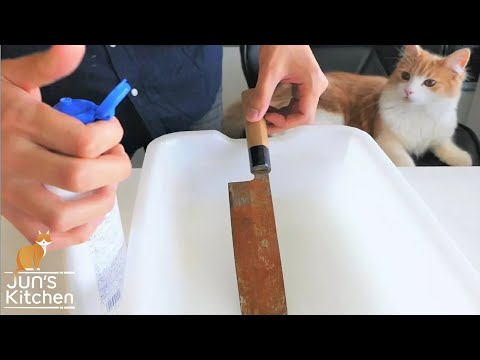
My suggestions is to constantly utilize the entire length of the the stone, to make certain wearing is even, and it's much easier to be slow and steady. How often you sharpen depends upon how often you use them and the kind of steel. I utilize Globals and Mundials and the Globals need much less sharpening Mundials.
Prep your stones Depending upon what stones you use, you might need to soak or not. I use the Naniwa stones that simply require to be damp and don't need soaking. I keep a spray bottle for this. I use 400, 1000 and 3000 stones. 2. Ensure your stone is flat You want a flat stone so that the angle between your knife and stone is stye exact same along the whole length of the stone.
If there is a noticeable curve, ask a professional to flatten it. After this, maintaining a flat stone is simple. 3. Decide your angle Usually 15-20 degrees. I find the Japanese knives are normally at around 15 degrees and European knives are around 20 degrees based on a little experimentation.
Premium Sharpening Stone – Questions
4. Holding the knife & stroke One hand on the manage (naturally) holding the knife at the preferred angle. The other hand, fingers on the flat of the blade. Wrists straight. The honing stroke is when the knife moves away from the edge. So if the edge is dealing with towards you, push into blade as you press your blade away however release the pressure as you pull the blade towards you.
 My excellent blog 2121